
As African parents, we are deeply committed to raising our children with love, values, and a strong sense of identity. In today's ever-changing world, discussing race and racism is not just important; it's imperative. This article offers guidance to African parents on initiating conversations about race and racism with our children, recognising the significance of these dialogues in their lives.
The Significance of Talking About Race: Discussing race with our children holds immense importance for several reasons:
Preserving Identity: These conversations help our children embrace and appreciate their African heritage, instilling a sense of pride in their cultural identity.
Countering Stereotypes: Addressing race allows us to challenge stereotypes and biases our children may encounter, empowering them to rise above prejudice.
Nurturing Empathy: Conversations about race encourage empathy, teaching our children to stand in solidarity with others who face discrimination.
Empowering Future Leaders: By discussing racial issues, we equip our children with the knowledge and awareness needed to become advocates for social justice and equality.
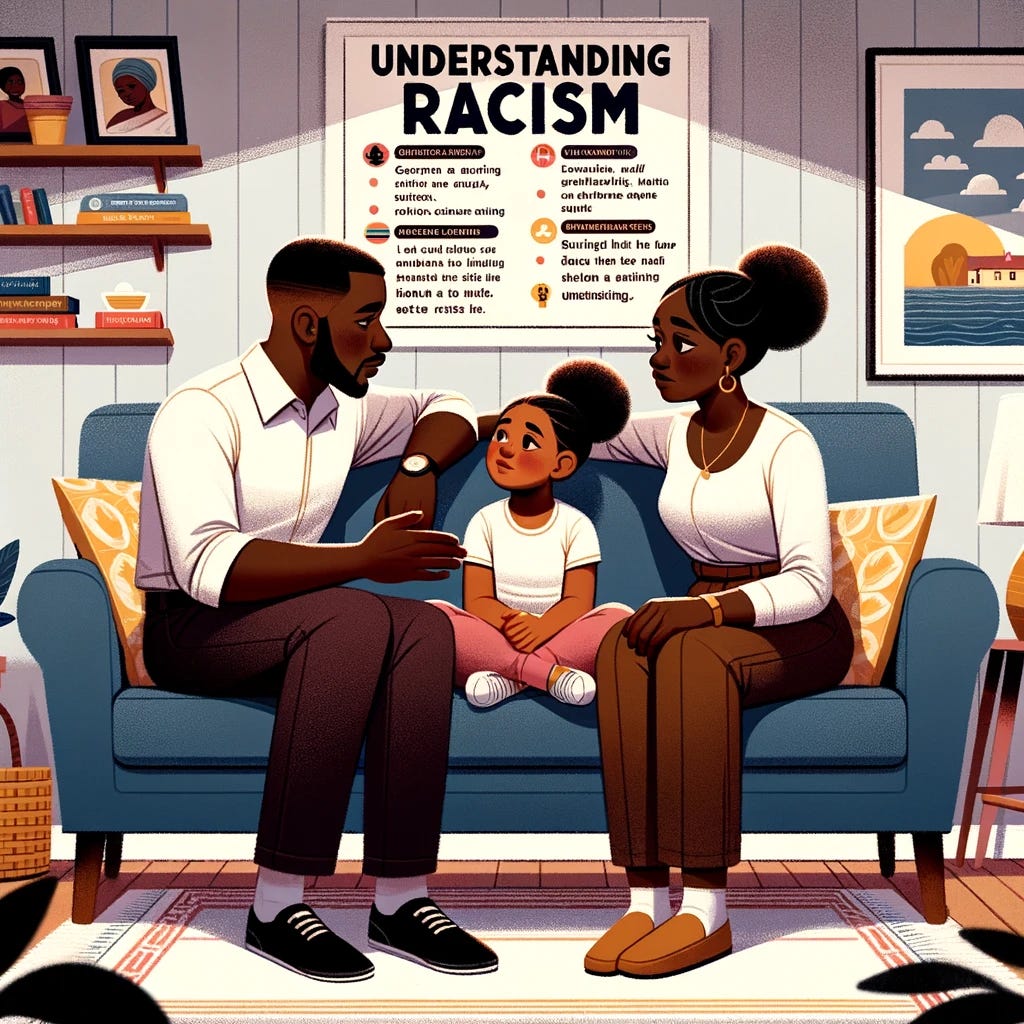
How to Initiate Conversations About Race:
Start Early: Initiate discussions about race when your children are young. Use age-appropriate books, stories, and experiences to introduce the topic gently.
Be a Role Model: Demonstrate inclusivity and respect for all cultures in your own behavior and language. Our children learn best by observing us.
Everyday Learning: Use everyday situations to discuss race, such as when watching diverse communities or interacting with people from different backgrounds.
Ask Open-Ended Questions: Encourage your children to ask questions and share their thoughts. Use open-ended queries like, "How do you feel about that?" or "What can we learn from this?"
Share Our Stories: Read books and share family stories that celebrate African culture and heritage while addressing issues of race, discrimination, and unity.
Honesty Matters: Provide accurate, age-appropriate information about historical and contemporary racial issues, ensuring transparency and honesty.
Encourage Critical Thinking: Teach our children to think critically about media portrayals, stereotypes, and biases they may encounter.
Active Listening: When our children express their thoughts or concerns related to race, listen actively, validate their feelings, and offer guidance.
Empower Them: Empower our children by discussing ways to stand up against racism and promote equality. Encourage them to be advocates for change.
Seek Resources: Continuously educate yourself about racial issues, accessing books, articles, and online resources. This knowledge will aid you in guiding your children effectively.

As African parents, it is our duty to nurture well-rounded, culturally aware, and empathetic children who embrace their heritage and stand up against racism. Initiating conversations about race and racism is not just a teaching moment; it's a lifelong journey that equips our children with the tools to build a more inclusive and equitable world. These discussions help them not only embrace their African identity but also become advocates for social justice. By engaging in open, honest, and empathetic dialogues, we empower our children to be the leaders of tomorrow, driving positive change for all.