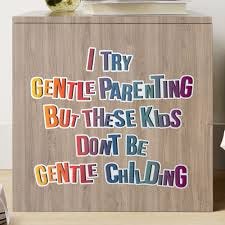
The first time I tried gentle parenting in public, I was in Tesco.
My daughter was mid-tantrum in the snack aisle, performing for an imaginary Nollywood camera crew. I crouched down, ready to deploy my new gentle parenting skills, and said in my calmest voice, “I can see you’re frustrated. Let’s talk about your feelings.”
This Nigerian “aunty” walked past, shook her head, and muttered something about children and manners. And that’s when it hit me: gentle parenting feels like a foreign language in the African cultural script.
Because let’s be honest, most of us didn’t grow up with, “Let’s talk about your emotions.” We grew up with, “Stop crying before I give you something to cry about.”
The cultural wrestling match
African parenting was (and still is) about survival. Our parents didn’t have time for TED Talks about “validating feelings” when they were raising us in worlds that weren’t designed to be kind. Discipline wasn’t a conversation. It was a look. A “test me again and see what happens” kind of look.
Gentle parenting, on the other hand, tells us to pause, empathise, and communicate. Meanwhile, our inner African parent is whispering, “Spare the rod and spoil the child.”
We’re torn between wanting to honour our cultural roots and knowing that some of those roots were watered with fear. Between wanting to validate our children’s feelings and wanting to yell, “Will you sit down before I disgrace myself in this supermarket?!”
As the Igbo say, “A child who is not embraced by the village will burn it down to feel its warmth.” But what if the only “warmth” we were taught was fire from the slippers?
Can you be both?
Here's what I've learned: gentle parenting isn't about throwing culture away. It's about separating what truly serves us from what only kept us silent.
It's not permissiveness - that's where many people get confused. It's boundaries with empathy. It's discipline without humiliation. It's authority without fear. It's still saying "no" when necessary, but explaining the "why" instead of demanding blind compliance.
But here's the kicker: it starts with us. A lot of what we call "culture" was actually trauma dressed in Ankara and quoting Bible verses. If we don't confront our own wounds, we'll pass them on, just with softer voices and maybe some essential oils.
The hardest part isn't learning new parenting techniques. It's unlearning the voice in our heads that says showing empathy to our children makes us weak, or that explaining our decisions somehow diminishes our authority.
Becoming intentional parents
Being African doesn't mean photocopying every parenting method of our parents. Culture evolves. Our ancestors adapted to survive different challenges - colonialism, poverty. Now it's our turn to adapt to help our children thrive in their reality.
What does it mean to be an intentional African parent? It means we examine everything. We ask: does this tradition build character or just compliance? Does this approach create respect or just fear? Does this "cultural value" actually serve our children, or are we just doing it because "that's how it's always been done"?
We can keep the best of our traditions - respect, community, shared responsibility, while ditching the bits that left scars. We can maintain our cultural identity without maintaining every cultural practice.
What if we kept the village mentality but made it emotionally safer? What if kneeling to greet wasn't just about performance, but about teaching humility? What if discipline wasn't about shame, but about guiding children to make better choices?
What if "because I said so" became "let me explain why," so children grow up knowing their voices matter too? Not because we're becoming "soft" or "too Western," but because we're intentionally choosing what kind of parents we want to be.
Why it’s worth it
When we choose connection over control, we break cycles. We raise children who respect us because they feel safe with us, not because they fear us.
One day, maybe they’ll say, “My mum taught me to think for myself, and she didn’t have to hurt me to do it.”
That’s the kind of legacy I want.
The evolution continues
Gentle parenting doesn't make us less African. It makes us intentional. We can still raise grounded, respectful children who carry their culture with pride, without the trauma soundtrack. We can honour our ancestors while also acknowledging that some of their methods were products of their circumstances, not timeless wisdom.
Our children can still greet their elders properly, understand the value of community, and carry themselves with dignity. They can still be proudly African. The difference is they'll also know their feelings are valid, their voices matter, and love doesn't come with conditions.
Because maybe the most African thing we can do is evolve. Our ancestors did it. Now it's our turn.
And if that means dealing with some side-eyes in the supermarket while I validate my child's emotions? So be it.
I'd rather raise a child who feels seen than one who just looks obedient.
Can gentle parenting and African parenting co-exist? Share your thoughts in the comments.
With love, intentionality, and the courage to evolve
– The African Parent